Skip to the collection
UMKAUmka Mining Services, back to the top

UMKA

Mining Services

Tourmaline, mined in Oyo State.

Umka Mining Services works the Oyo pegmatite belt for gem tourmaline, with beryl and industrial minerals out of the same ground. We are open to partners who want to work it with us.

Tourmaline · Gemstones · Industrial minerals

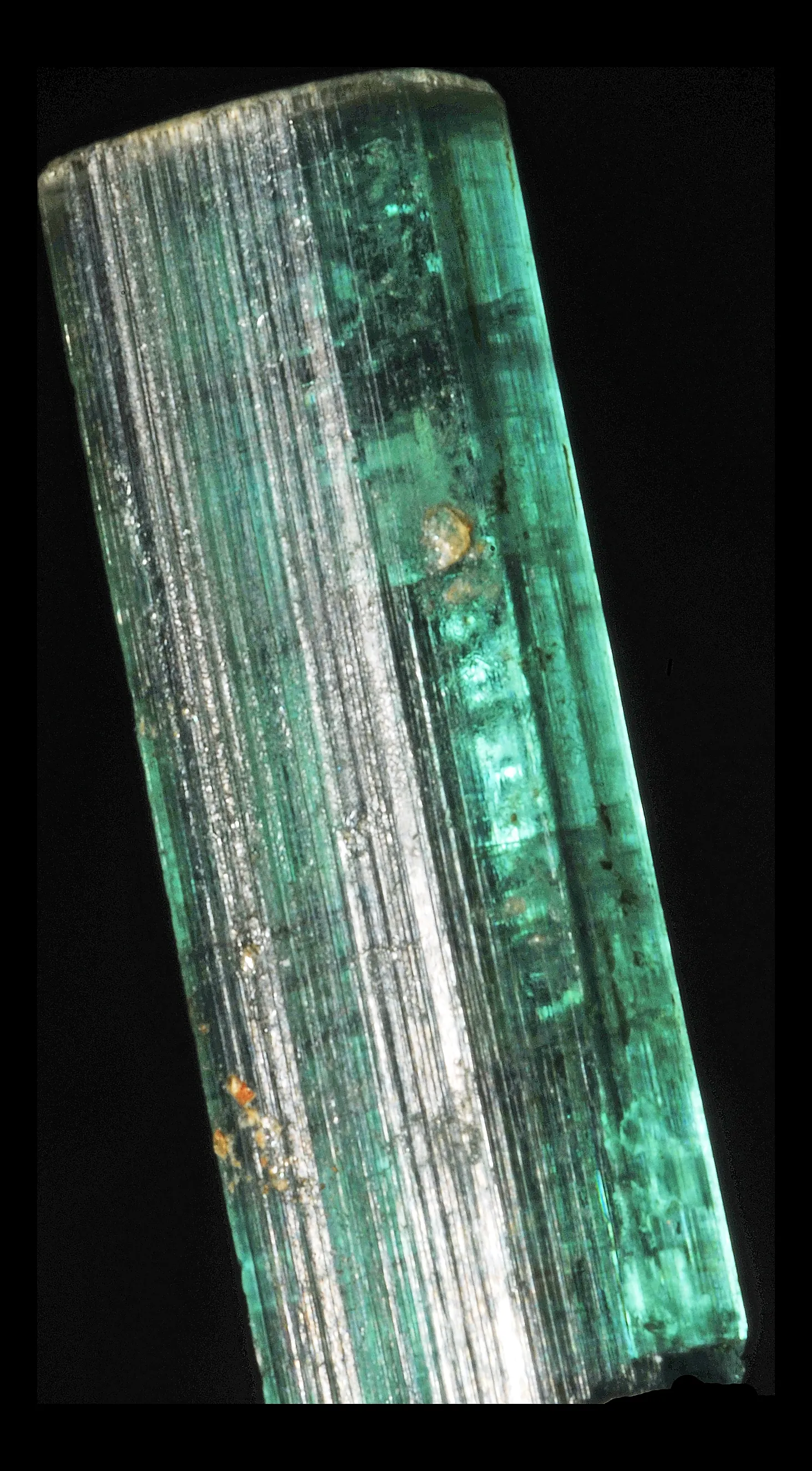
A Paraiba tourmaline crystal: a heavily striated prism in neon blue-green, lit on a black ground.

Paraíba tourmaline · copper-bearing elbaite


Plate I.01 · The collection · Oyo State, Nigeria

TourmalineParaíba, cuprian elbaite

Formula
Na(Li,Al)₃Al₆(BO₃)₃Si₆O₁₈(OH)₄
System
Trigonal
Hardness
7 – 7.5
Sp. gravity
3.0 – 3.2

Chapter 01

Everything in this catalogue was dug out of the ground.

Umka Mining Services works three lines out of Oyo State: tourmaline first, then the beryl that grows beside it in the same pegmatite, then the industrial minerals that move in volume. The plates that follow are the materials themselves, catalogued the way a collection is catalogued, with the facts that decide what a parcel is worth.

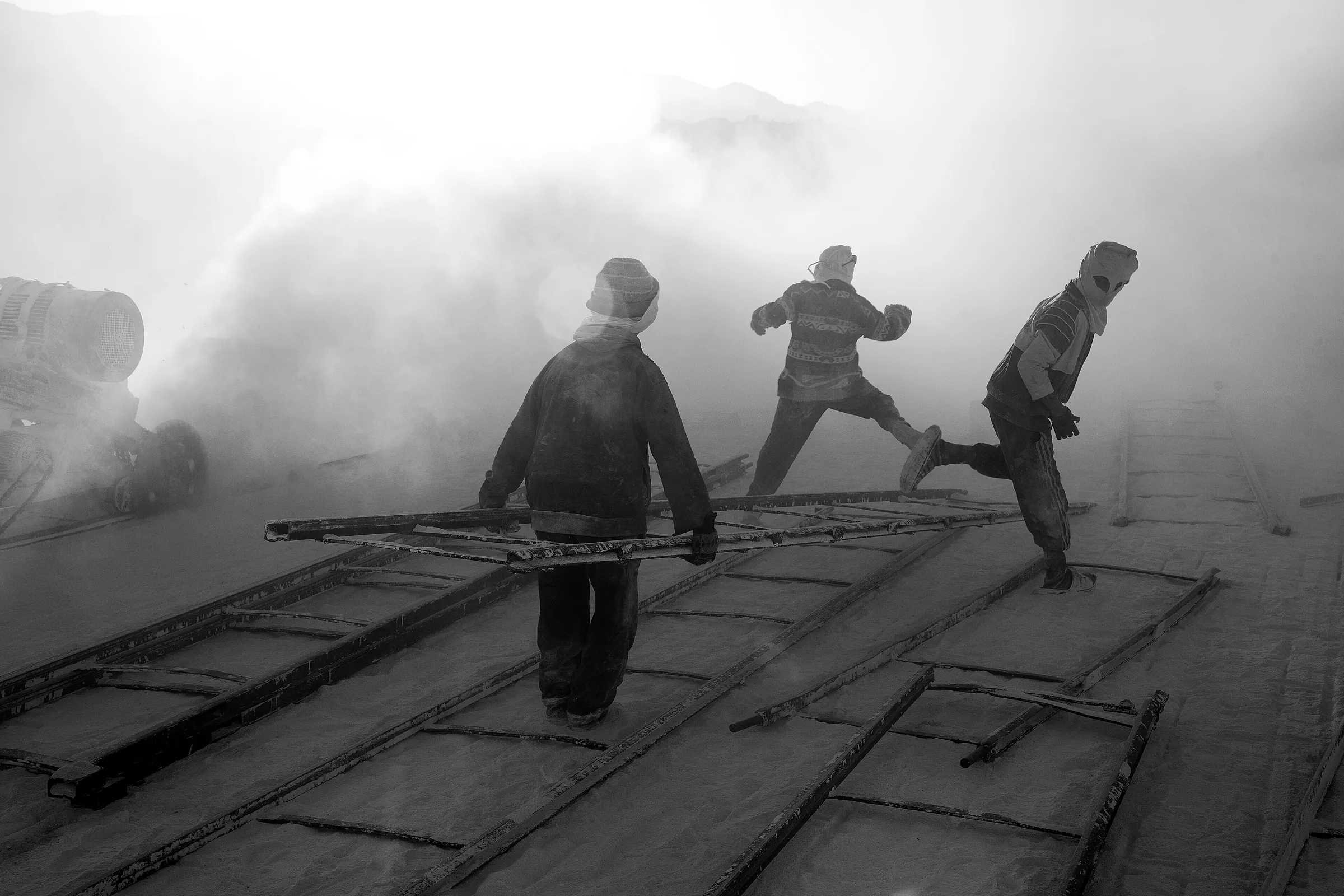
Three workers on a screen deck in heavy dust at a limestone quarry.
Field 01A screen deck under load. Sizing is the first thing that happens to any material after it is broken, and it decides what can be sold and what goes back on the pile.
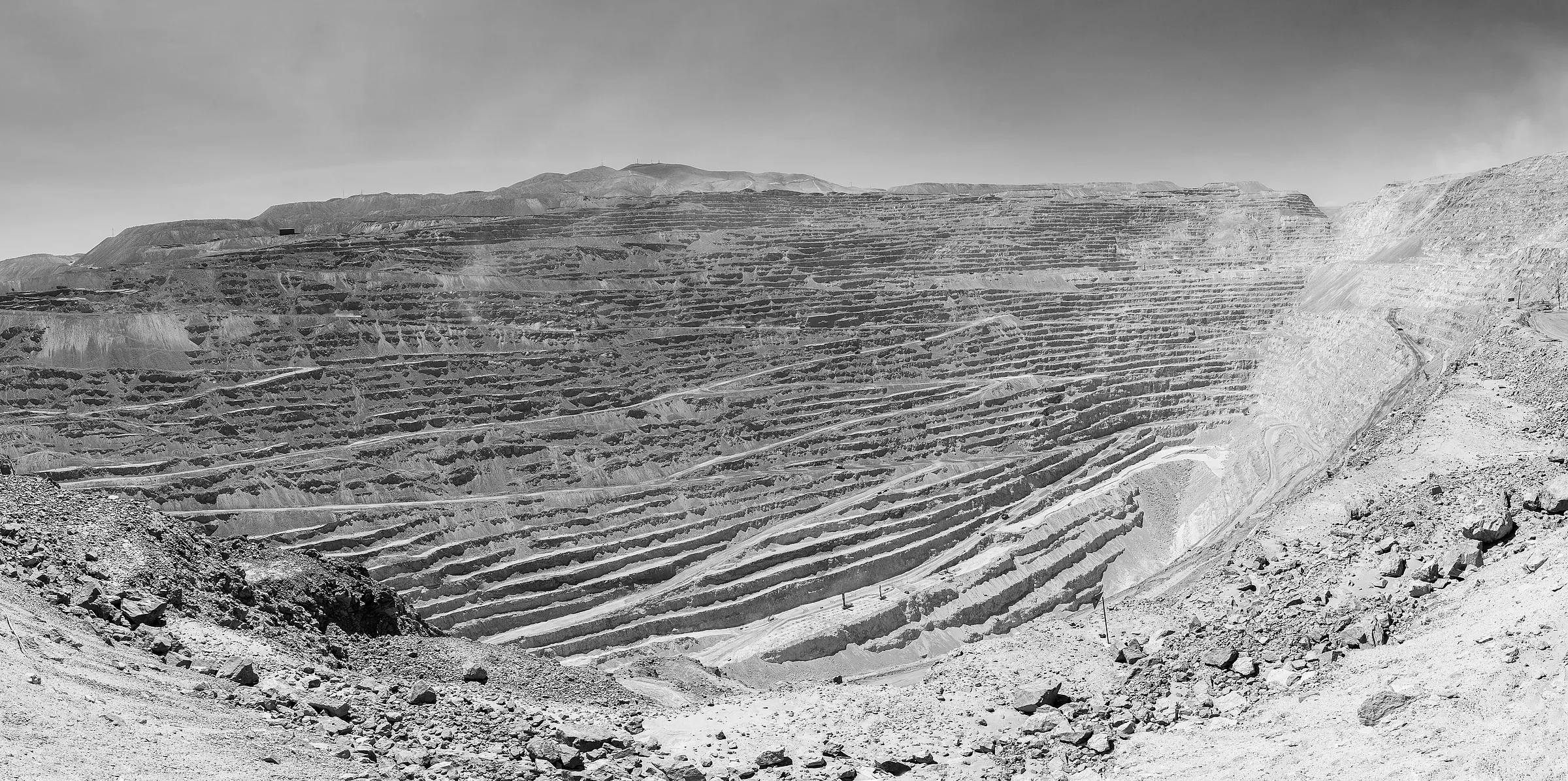
An open pit cut in benches, seen across the void.
Field 02Benches. The wall is cut in steps so that it stands up, and the step height is a geotechnical decision before it is an economic one.
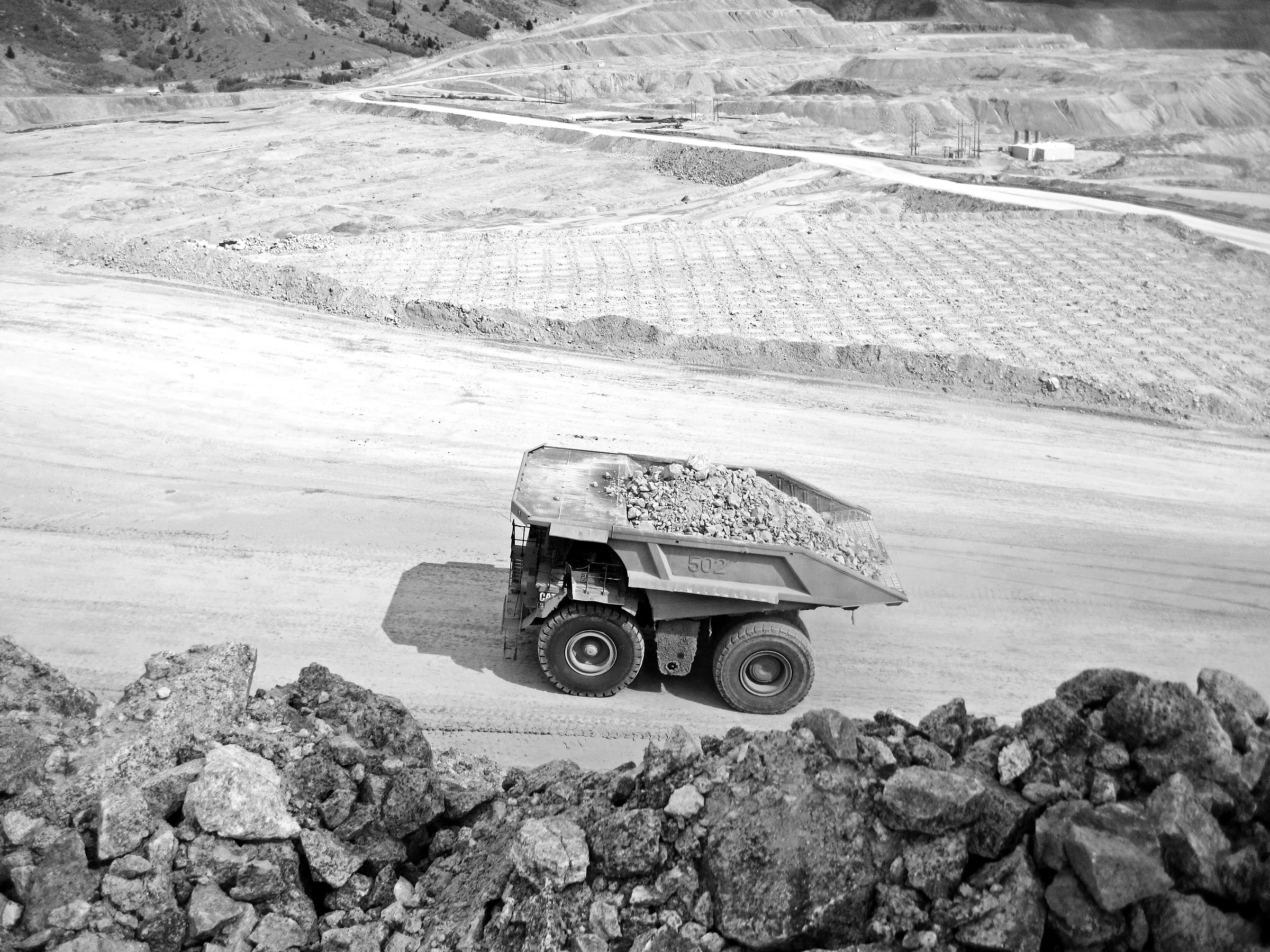
A haul truck loaded with broken rock on a mine bench.
Field 03Haulage. Most of what a mine spends, it spends moving rock that is worth nothing to get at rock that is worth something.

Tourmaline

The line this company was built on. Tourmaline grows in pegmatite, which is granite that cooled slowly enough to make big crystals out of the elements nothing else wanted, and Oyo has a great deal of it. Plate I.02 below is lit in relief, under a light you can move across it.

Tourmaline, schorl, on quartz. Specimen plate I.02, lit in relief.

Plate I.01, in relief

Plate I.02

Tourmalineschorl, on quartz

Formula
NaFe₃Al₆(BO₃)₃Si₆O₁₈(OH)₄
System
Trigonal
Hardness, Mohs
7 – 7.5
Specific gravity
3.1 – 3.3

HabitBlack prisms, often driven straight through the quartz that grew around them.

Worked forThe iron end of the group, and the common one. It is rarely cut, but it is the field indicator: where schorl runs, the pegmatite is fertile, and the gem elbaite is somewhere in the same body.

In NigeriaUbiquitous in the pegmatites of Oyo, Nasarawa, Plateau and Kaduna.

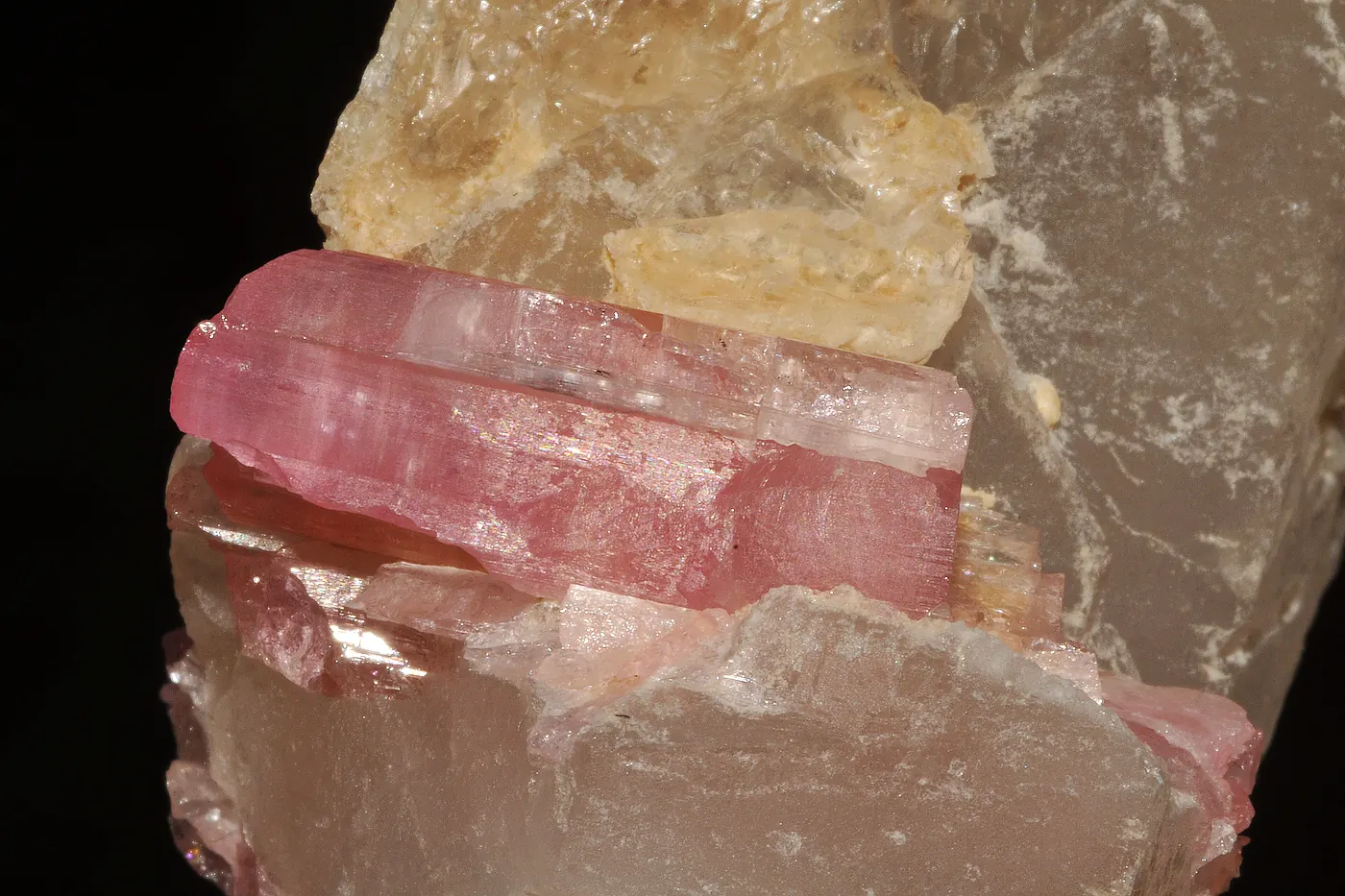
Tourmaline, elbaite, rubellite. Specimen plate I.03.

Plate I.03

Tourmalineelbaite, rubellite

Formula
Na(Li,Al)₃Al₆(BO₃)₃Si₆O₁₈(OH)₄
System
Trigonal
Hardness, Mohs
7 – 7.5
Specific gravity
3.0 – 3.2

HabitLong prisms, striated down the length, rounded-triangular in section.

Worked forFaceted and cut en cabochon. Rubellite is the pink to red end of elbaite, and the colour is worth more than the weight: a clean stone is priced on hue and saturation long before it is priced on carats.

In NigeriaThe same Oyo pegmatite belt. Ofiki, Komu and the fields around Iseyin have produced gem elbaite for decades.

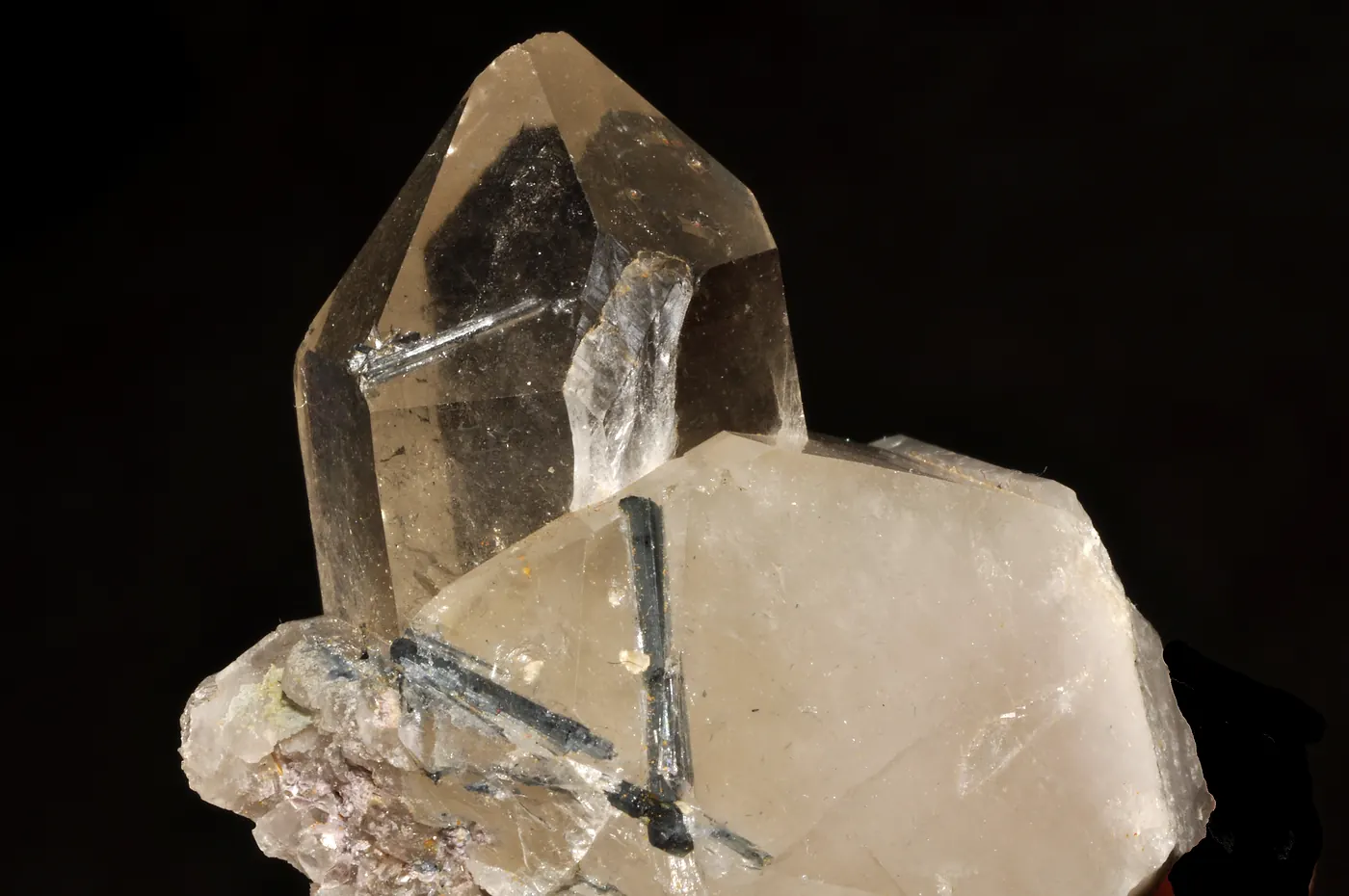
Tourmaline, schorl with beryl. Specimen plate I.04.

Plate I.04

Tourmalineschorl with beryl

Formula
(Na,Ca)(Mg,Fe,Li,Al)₃Al₆(BO₃)₃Si₆O₁₈(OH)₄
System
Trigonal
Hardness, Mohs
7 – 7.5
Specific gravity
3.0 – 3.2

HabitSchorl prisms grown against beryl and orthoclase in a single pocket.

Worked forSpecimens like this one are why the two lines on this page are one business: the tourmaline and the beryl come out of the same cavity, and a partner working one is already standing on the other.

In NigeriaThe pairing is characteristic of the Nigerian pegmatite fields.

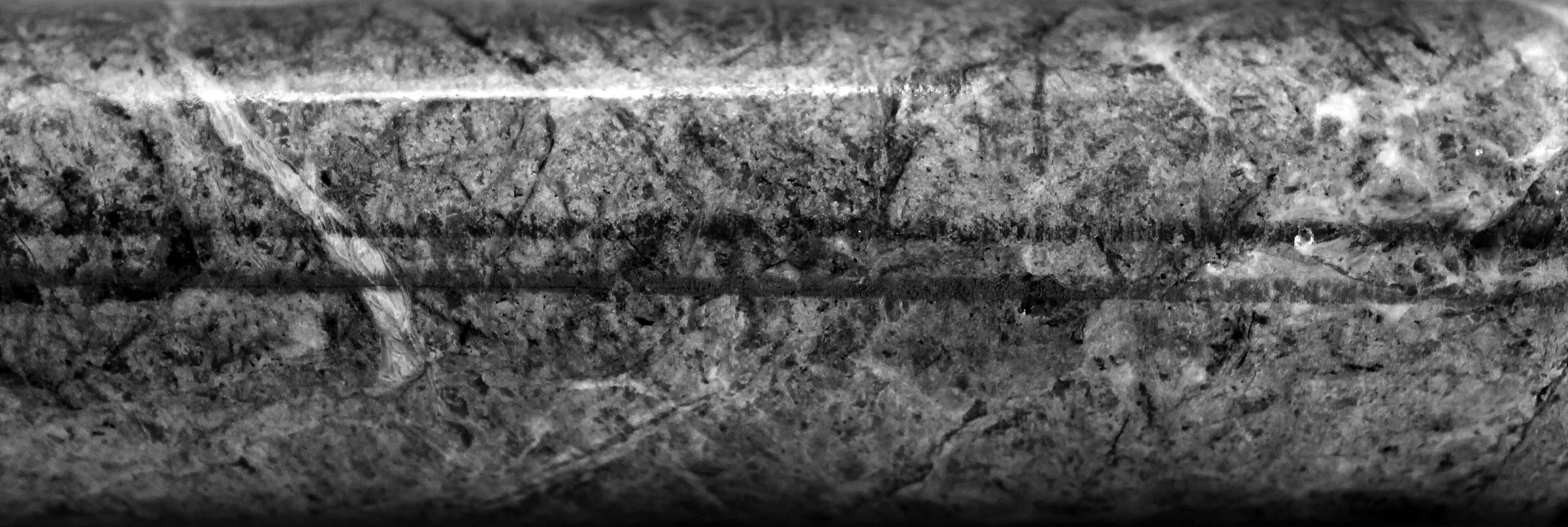
A length of drill core, banded across its width.
Field 04Core. Before anything is mined it is drilled, split, logged and assayed. This is the evidence a deposit is argued from, and it is why nobody sane buys a mine on a photograph.

Gemstones

Beryl comes out of the same pockets as the tourmaline. Emerald and aquamarine are one mineral separated by a trace element, which is why a pegmatite that pays for one is worth testing for the other.

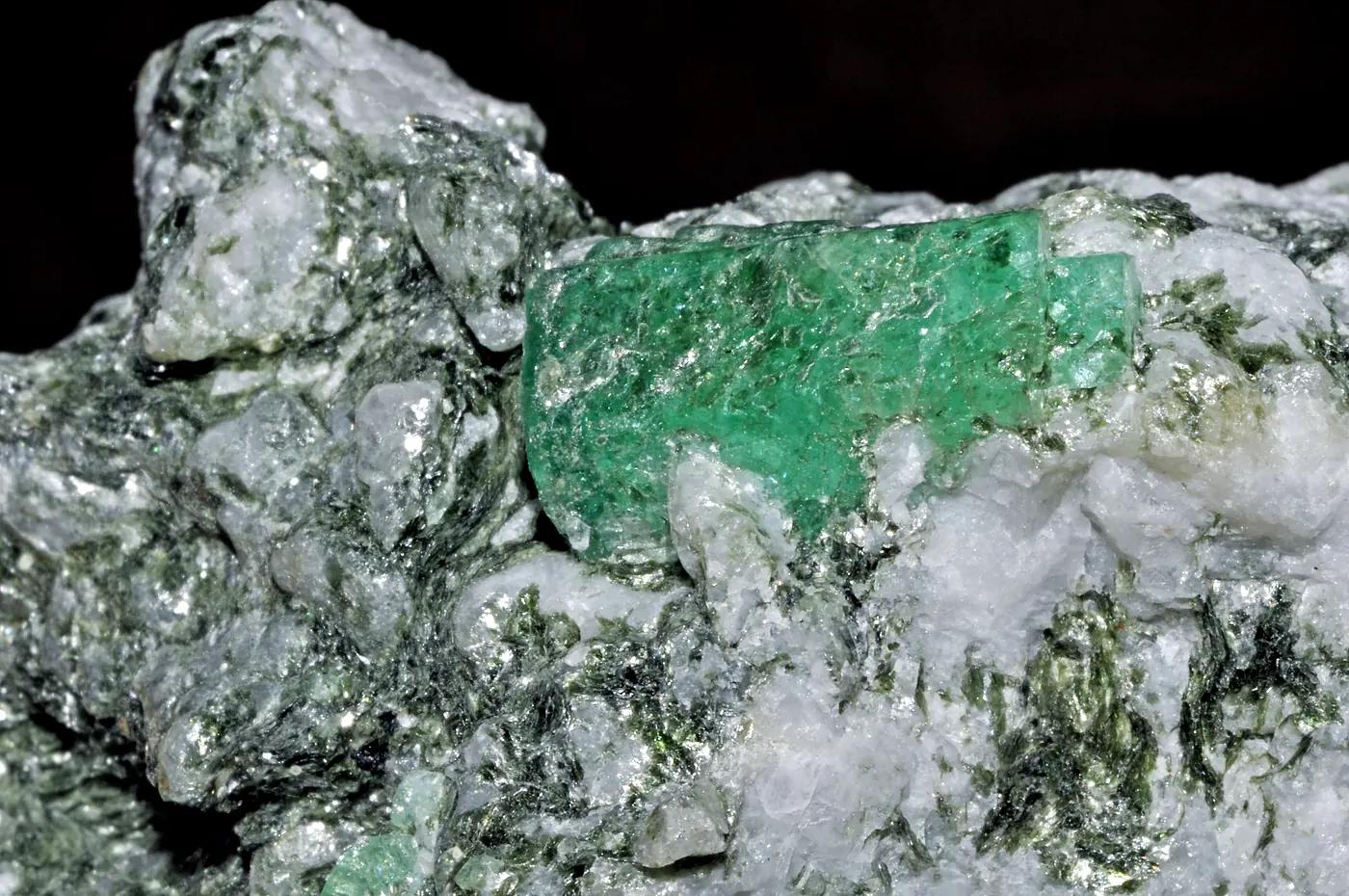
Beryl, emerald. Specimen plate II.01.

Plate II.01

Berylemerald

Formula
Be₃Al₂Si₆O₁₈
System
Hexagonal
Hardness, Mohs
7.5 – 8
Specific gravity
2.6 – 2.8

HabitHexagonal prisms grown into mica and calcite matrix.

Worked forFaceted. Emerald is beryl coloured by chromium or vanadium, and it is graded on colour and on how much of the internal garden a buyer will accept, not on clarity alone.

In NigeriaBeryl runs through the same pegmatite belts as the tourmaline, in Oyo, Nasarawa, Plateau and Kaduna.

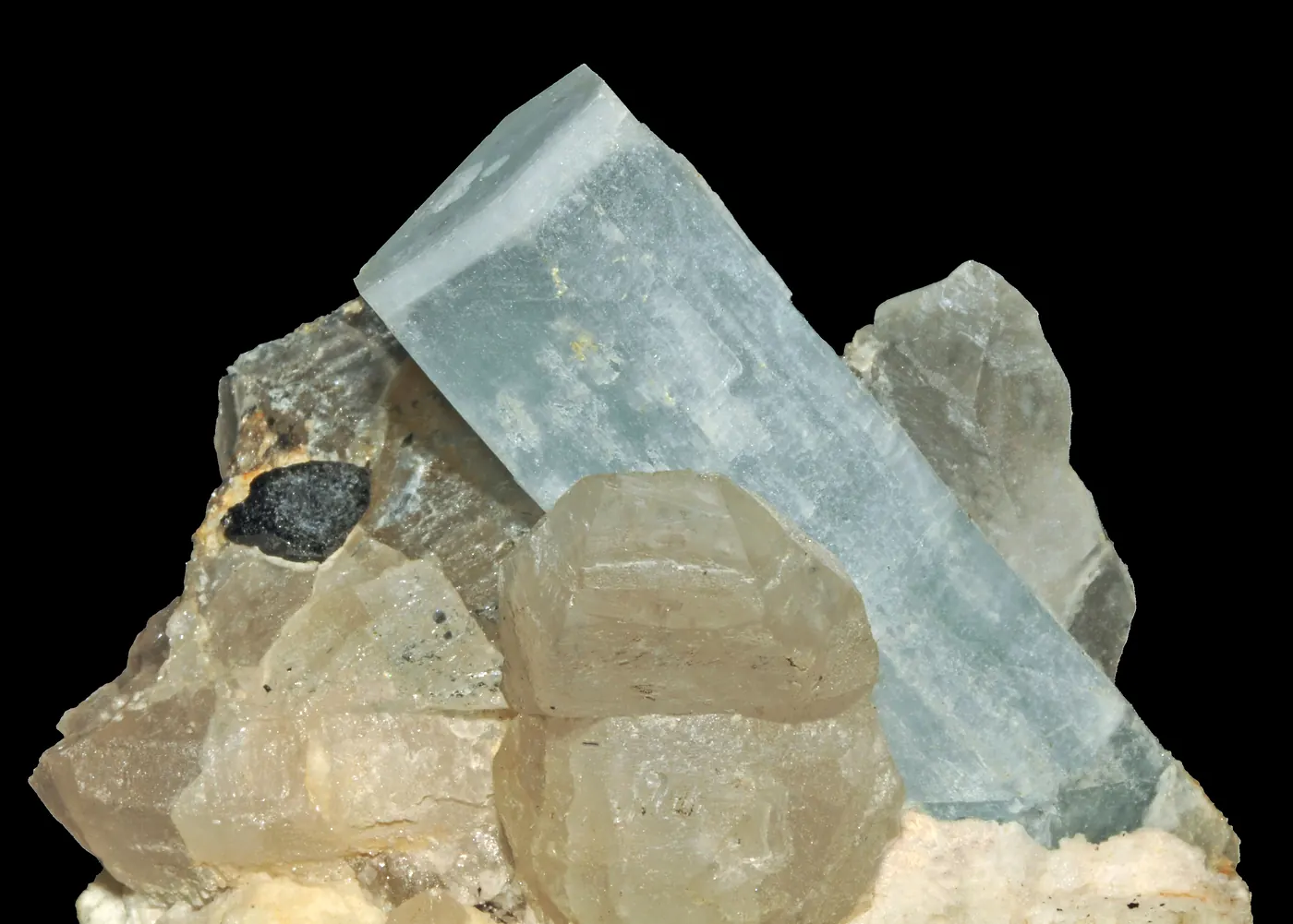
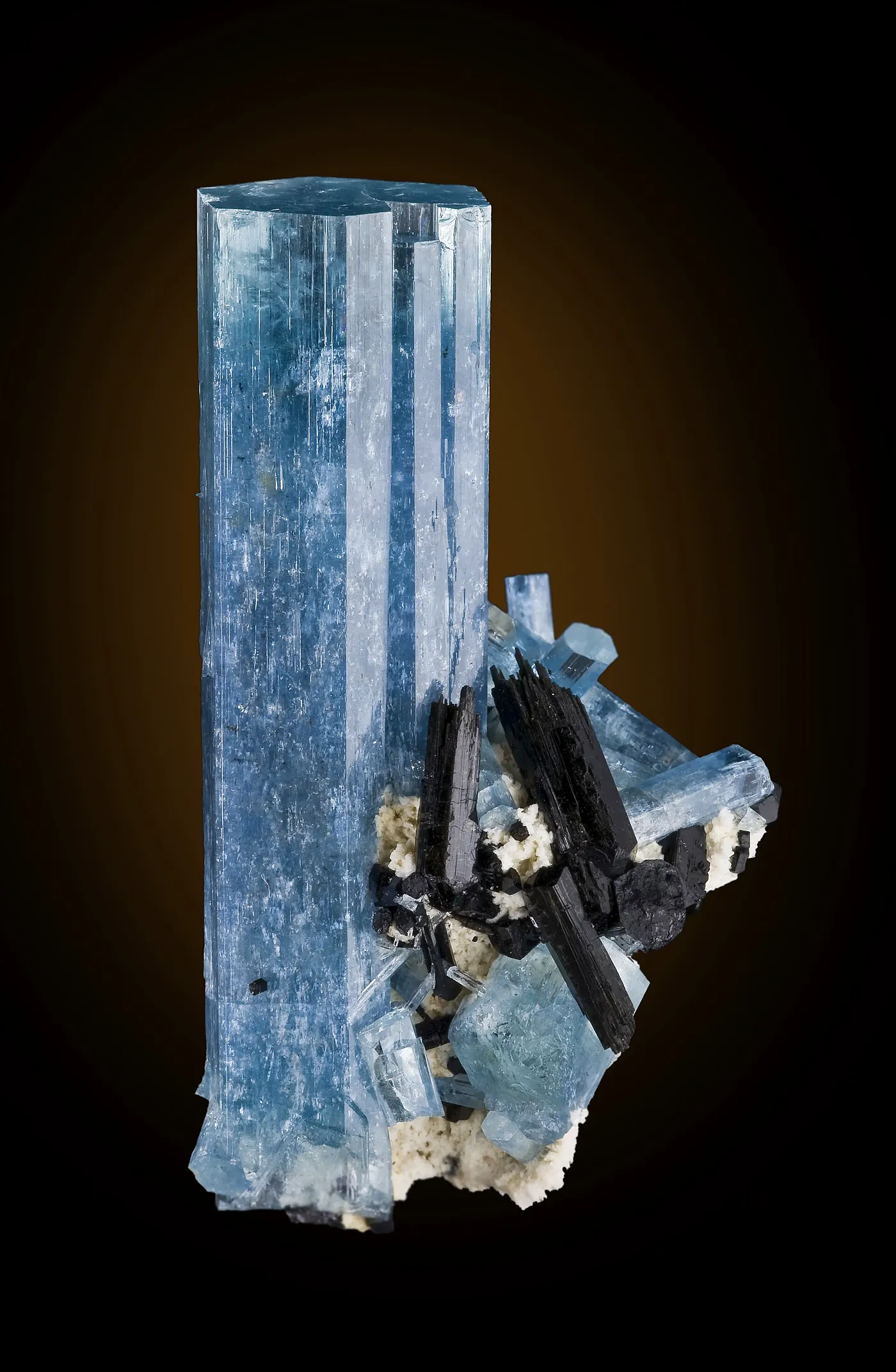
Beryl, aquamarine. Specimen plate II.02.

Plate II.02

Berylaquamarine

Formula
Be₃Al₂Si₆O₁₈
System
Hexagonal
Hardness, Mohs
7.5 – 8
Specific gravity
2.6 – 2.9

HabitHexagonal prisms with flat terminations, often on a mica matrix.

Worked forFaceted. The same species yields emerald, heliodor and morganite; only the trace element changes.

In NigeriaRecorded from the pegmatites of Plateau, Kaduna and Nasarawa.

Industrial minerals

The unglamorous line, and the one that moves in volume. Barite goes down a well, gypsum goes into cement, granite goes under a road. None of it is sold by the carat, and all of it is sold by the tonne.

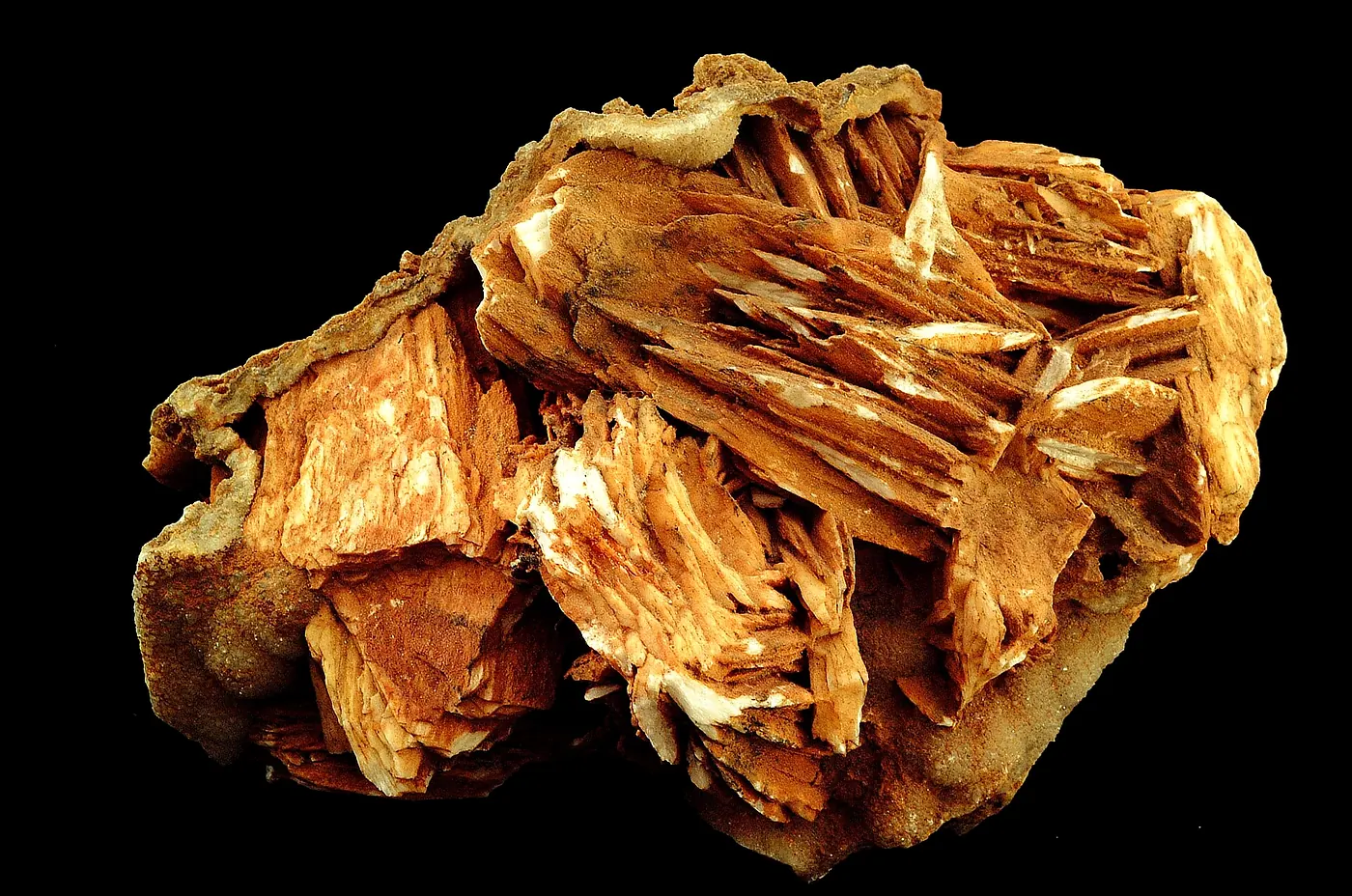
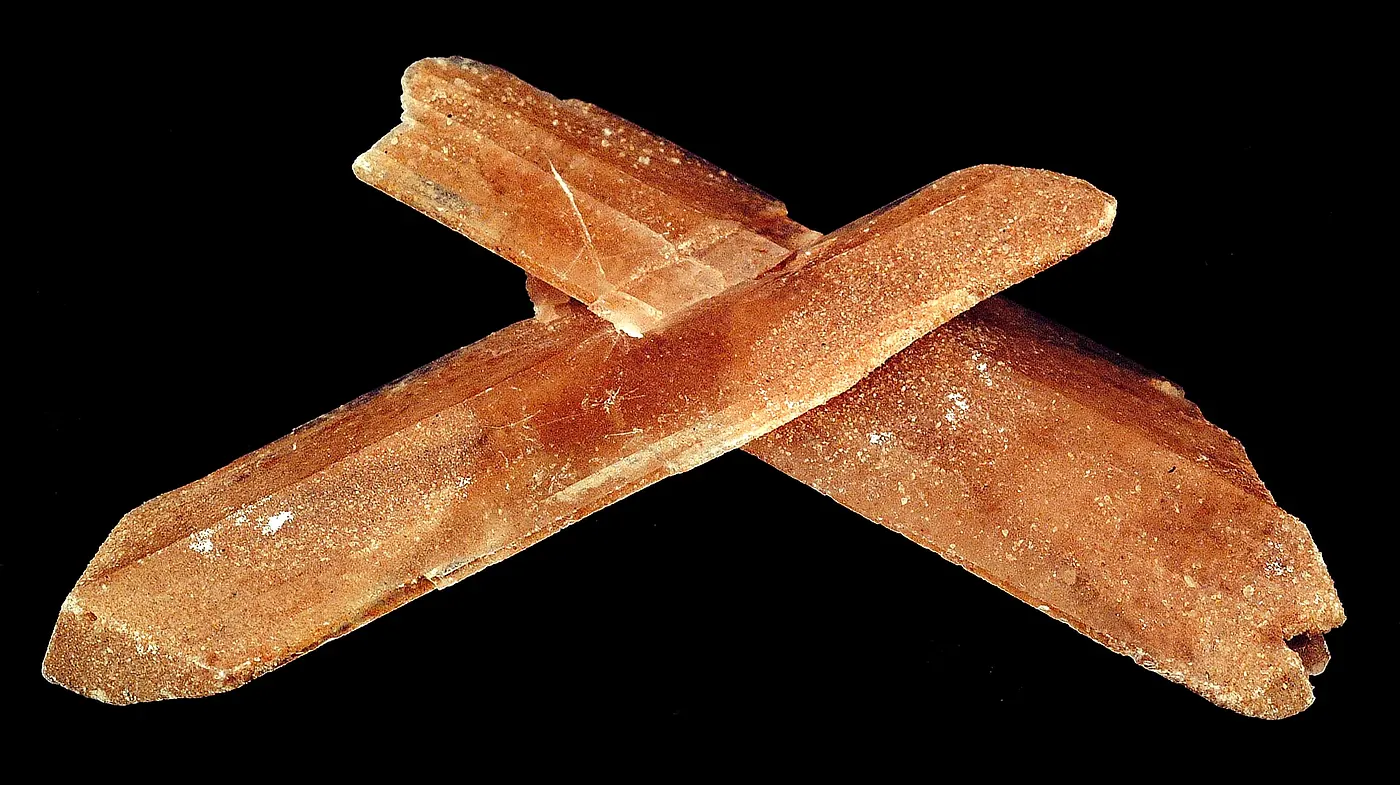
Barite, bladed. Specimen plate III.01.

Plate III.01

Baritebladed

Formula
BaSO₄
System
Orthorhombic
Hardness, Mohs
3 – 3.5
Specific gravity
4.5

HabitBladed and tabular crystals in rosettes; massive.

Worked forThe weighting agent in drilling mud. Its value is its density, which is why grade is quoted as specific gravity and not as purity alone.

In NigeriaThe Benue Trough (Benue, Nasarawa, Taraba and Cross River) carries the country's barite veins.

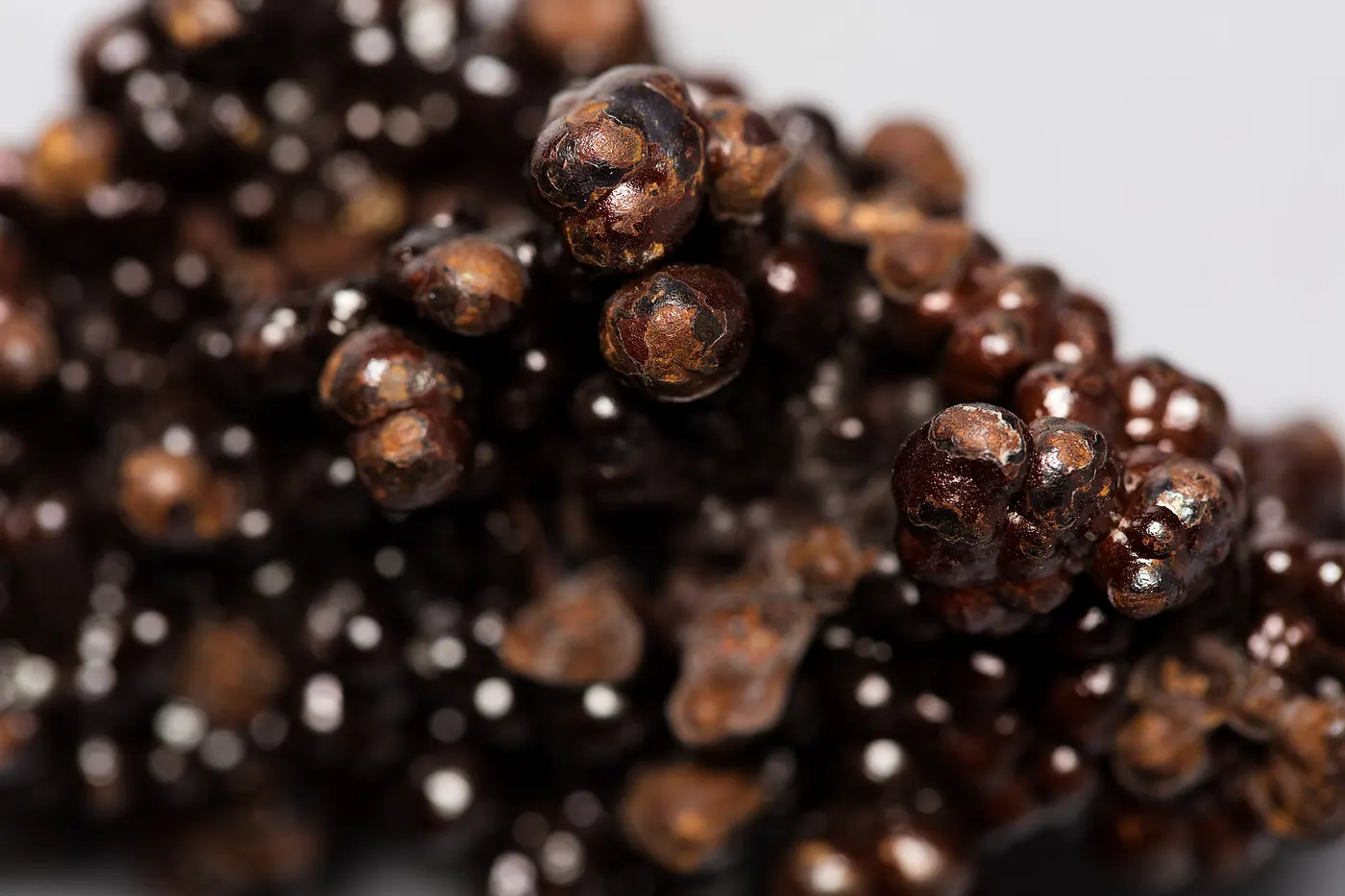
Cassiterite, botryoidal. Specimen plate III.02.

Plate III.02

Cassiteritebotryoidal

Formula
SnO₂
System
Tetragonal
Hardness, Mohs
6 – 7
Specific gravity
6.8 – 7.1

HabitShort prisms, knee-shaped twins, and botryoidal crusts.

Worked forThe only ore of tin worked at scale. Heavy enough to concentrate on a sluice, which is how it has always been won.

In NigeriaThe Jos Plateau tin field, in the alluvium and the Younger Granites, is the classic Nigerian occurrence.

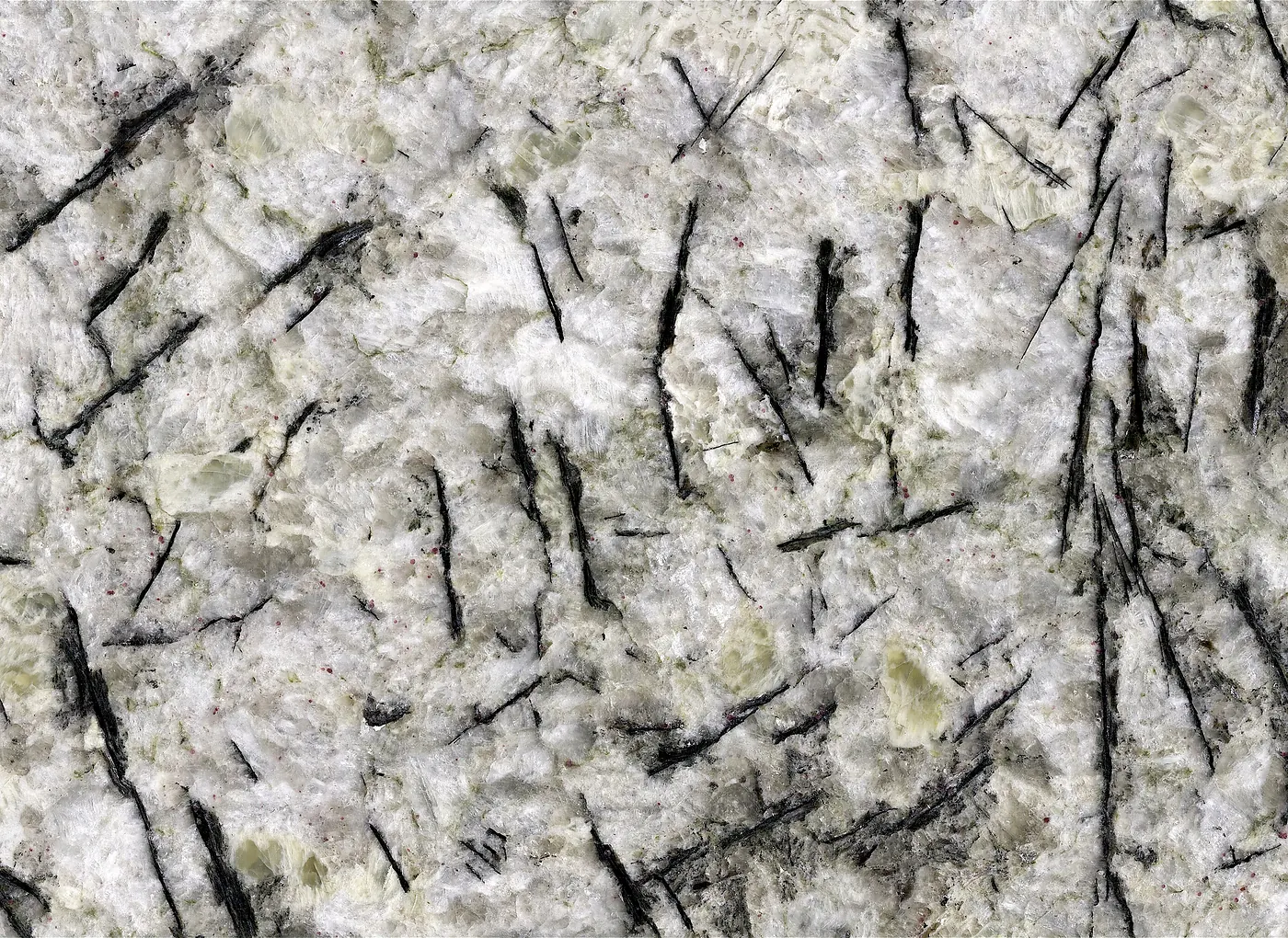
Granite, pegmatitic. Specimen plate III.03.

Plate III.03

Granitepegmatitic

Formula
Quartz · feldspar · mica
System
Rock, not mineral
Hardness, Mohs
6 – 7
Specific gravity
2.6 – 2.8

HabitInterlocking crystals coarse enough to read with the eye.

Worked forCrushed for aggregate and sawn for dimension stone. The pegmatitic bodies are also where the gem minerals sit, so the same ground pays twice.

In NigeriaQuarried across the basement complex; the Younger Granites of the Jos Plateau are the best known.

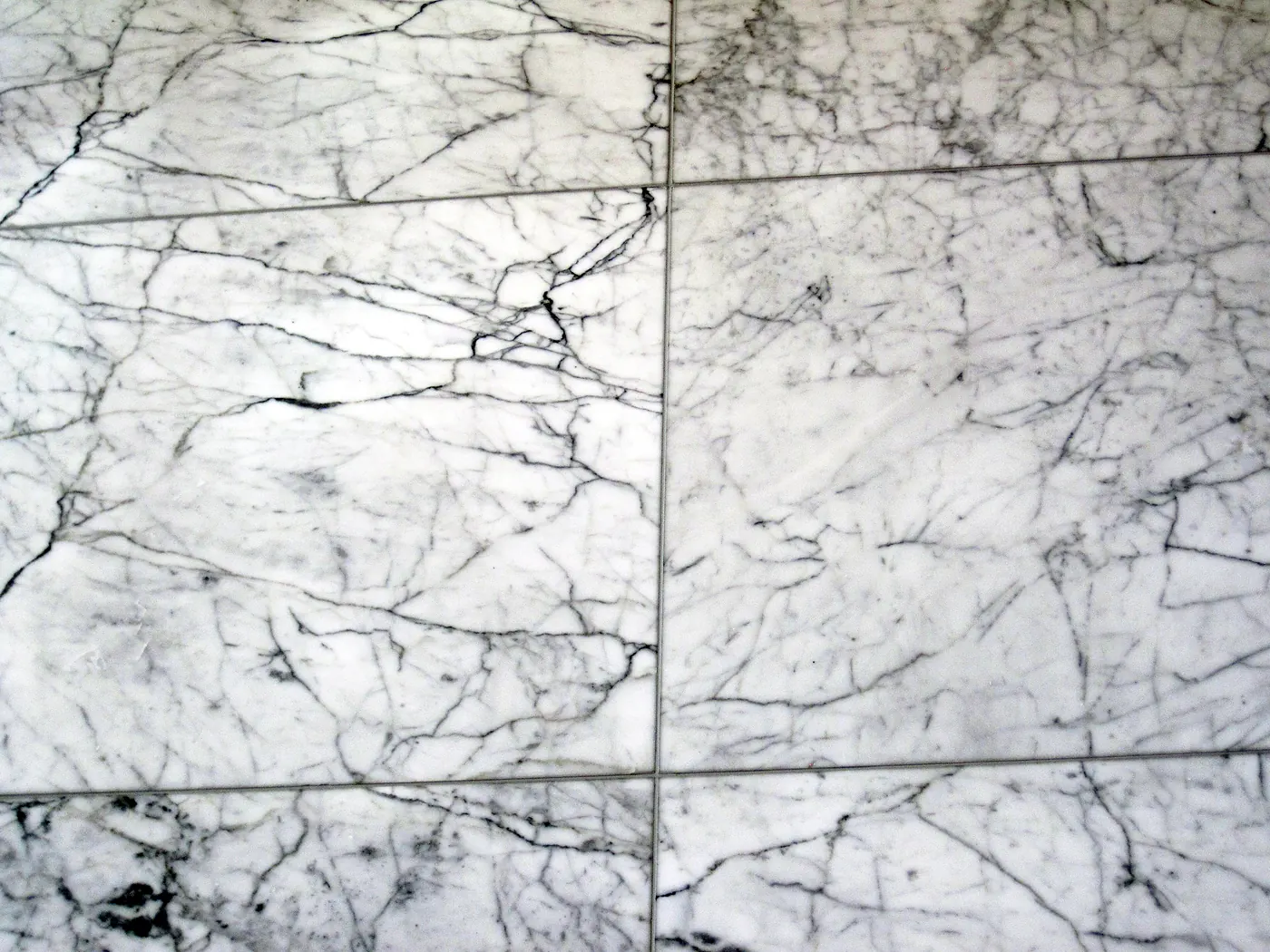
Marble, statuary, veined. Specimen plate III.04.

Plate III.04

Marblestatuary, veined

Formula
CaCO₃
System
Rock, not mineral
Hardness, Mohs
3
Specific gravity
2.7

HabitRecrystallised limestone; the veining is the impurity.

Worked forDimension stone, terrazzo, and, crushed, a filler and a flux.

In NigeriaJakura in Kogi is the largest worked body; Oyo and Edo also carry marble.

Gypsum, twinned, selenite. Specimen plate III.05.

Plate III.05

Gypsumtwinned, selenite

Formula
CaSO₄·2H₂O
System
Monoclinic
Hardness, Mohs
2
Specific gravity
2.3

HabitTabular crystals; swallowtail twins; fibrous satin spar.

Worked forPlaster, wallboard, and the retarder that stops Portland cement flashing off before it is placed.

In NigeriaSokoto, Gombe and Borno hold the worked deposits.

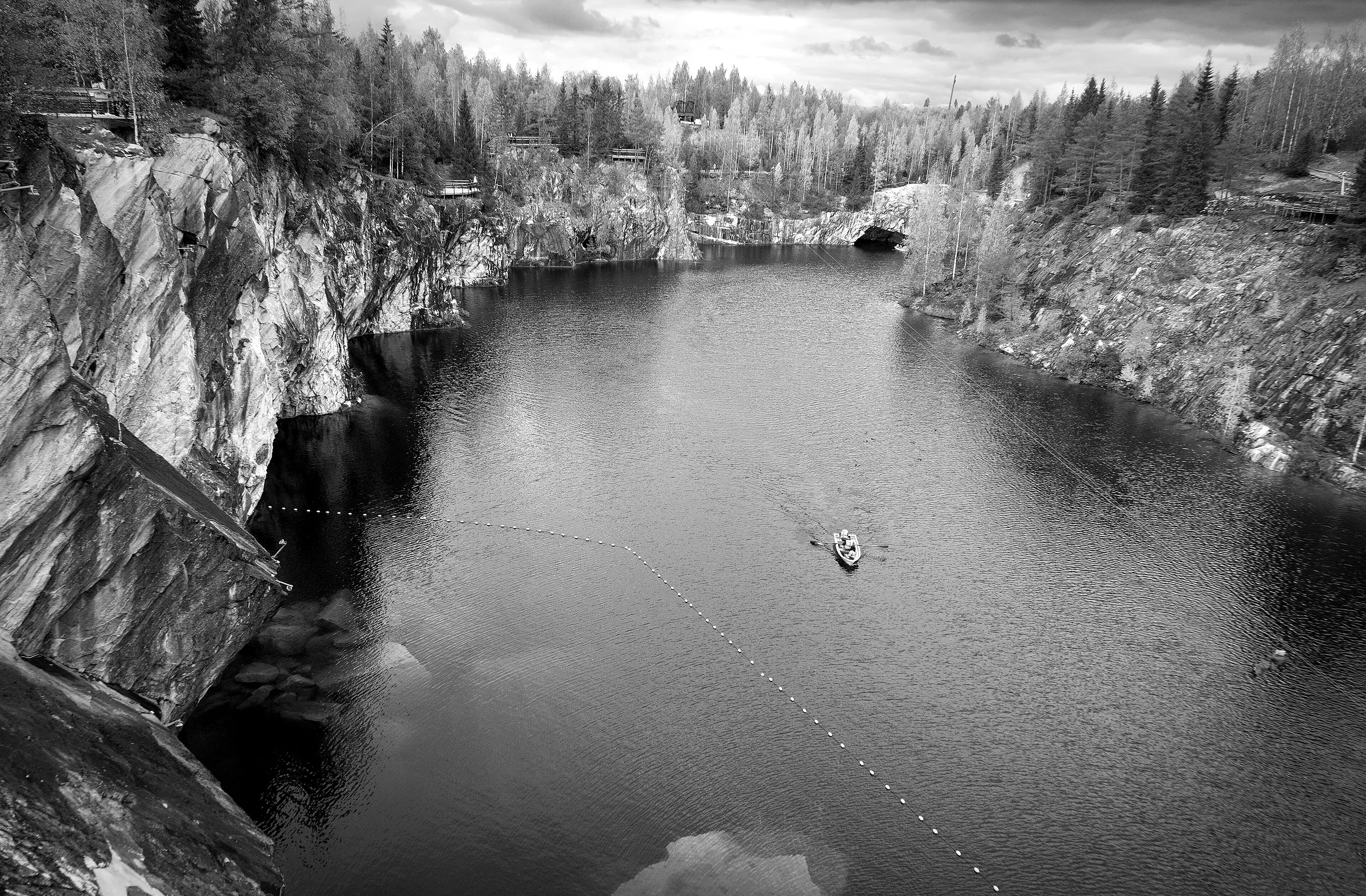
A worked-out marble quarry, the cut faces standing above water.
Field 05A quarry reads as a building in reverse: every face is a decision about where the stone was worth taking and where it was not.

The assay

The collection without its photographs. Sort it by the constant you buy on. Hardness decides what a stone survives, specific gravity decides what a tonne of it is.

Mineralogical constants for the materials in the collection, sortable by column.
Worked for
III.01Barite3 – 3.54.5OrthorhombicThe weighting agent in drilling mud. Its value is its density, which is why grade is quoted as specific gravity and not as purity alone.
II.01Beryl7.5 – 82.6 – 2.8HexagonalFaceted. Emerald is beryl coloured by chromium or vanadium, and it is graded on colour and on how much of the internal garden a buyer will accept, not on clarity alone.
II.02Beryl7.5 – 82.6 – 2.9HexagonalFaceted. The same species yields emerald, heliodor and morganite; only the trace element changes.
III.02Cassiterite6 – 76.8 – 7.1TetragonalThe only ore of tin worked at scale. Heavy enough to concentrate on a sluice, which is how it has always been won.
III.03Granite6 – 72.6 – 2.8Rock, not mineralCrushed for aggregate and sawn for dimension stone. The pegmatitic bodies are also where the gem minerals sit, so the same ground pays twice.
III.05Gypsum22.3MonoclinicPlaster, wallboard, and the retarder that stops Portland cement flashing off before it is placed.
III.04Marble32.7Rock, not mineralDimension stone, terrazzo, and, crushed, a filler and a flux.
I.01Tourmaline7 – 7.53.0 – 3.2TrigonalFaceted, and the most valuable tourmaline in the trade. The neon blue to blue-green comes from copper substituting into the elbaite structure, with manganese shifting it toward violet. Paraíba is a variety name for copper-bearing elbaite of that colour, not a place of origin: the Laboratory Manual Harmonisation Committee applies it to qualifying material wherever it was mined.
I.02Tourmaline7 – 7.53.1 – 3.3TrigonalThe iron end of the group, and the common one. It is rarely cut, but it is the field indicator: where schorl runs, the pegmatite is fertile, and the gem elbaite is somewhere in the same body.
I.03Tourmaline7 – 7.53.0 – 3.2TrigonalFaceted and cut en cabochon. Rubellite is the pink to red end of elbaite, and the colour is worth more than the weight: a clean stone is priced on hue and saturation long before it is priced on carats.
I.04Tourmaline7 – 7.53.0 – 3.2TrigonalSpecimens like this one are why the two lines on this page are one business: the tourmaline and the beryl come out of the same cavity, and a partner working one is already standing on the other.

Come and work it with us.

A pegmatite field is not a thing one company finishes on its own. We are looking for partners in Oyo State, Nigeria, and we would rather say plainly what we are short of than describe an opportunity.

Ground
Holders of licences or family land across the Oyo pegmatite belt who would rather see it worked properly than sit on it. We are interested in the fields around Ofiki, Komu and Iseyin in particular.
Plant and equipment
Partners who can put washing, screening or sorting capacity on site. Recovery is where a gem operation is won or lost, and a hand-sorted pile leaves stones in the tailings.
Offtake and trade
Buyers and cutters who want a consistent line out of one field rather than a parcel at a time from a dozen. That is a relationship, and it is worth more to both sides than a single lot.
Technical
Geologists and gemmologists who want to map and sample a pegmatite field properly. Tourmaline is found by understanding the body it grew in, not by digging where the last stone came from.

Plate VI · Inquiry

If you are buying, sampling, or ready to talk about partnership.

Lines worked
Tourmaline · Gemstones · Industrial minerals
Territory
Oyo State, Nigeria
Correspondence
info@umkamining.com

Tell us what you are after, or what you would bring. If a parcel needs to be assayed, or ground needs to be sampled, before anyone commits to anything, say so. That is the normal order of events, not a complication.